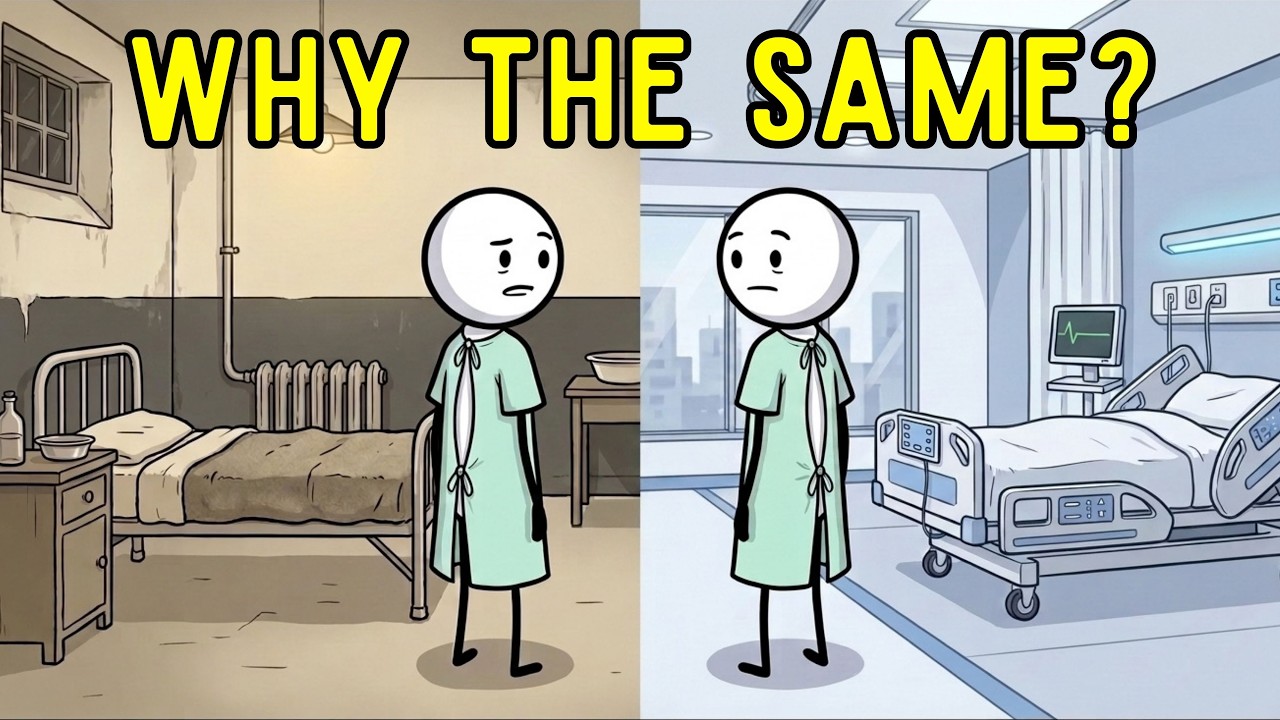
Nobody Has Fixed the Hospital Gown in 100 Years. Here's Why.
Why does one of the most common garments in healthcare still look almost exactly like it did a century ago?
The hospital gown seems like an obvious design failure: thin fabric, an open back, awkward ties, and almost no privacy. But the strange part is that people have tried to fix it. Major hospitals, designers, and patient-led projects have created better gowns that patients preferred — and most of those redesigns still disappeared.
This video follows the hidden system behind the hospital gown: emergency access, IV lines and medical equipment, industrial laundries, inventory rules, purchasing incentives, patient experience, and the simple fact that the person wearing the gown usually has almost no say in choosing it.
The answer is not that nobody cared. It is that nearly every force acting on the gown rewards the same basic design — while many of its costs remain invisible.
All research and sources are listed below.
???? RESEARCH & SOURCES:
▸ Cleveland Clinic patient gown redesign — The script discusses the 2010 collaboration with fashion designer Diane von Furstenberg to create a more covering wrap-style patient gown.
▸ Henry Ford Health / Model G — A patient-centered redesign project in Detroit that produced a gown with better coverage and was tested with patients.
▸ Care+Wear — Mentioned as one of the companies that has developed real products aimed at improving patient clothing and hospital garments.
▸ HCAHPS — The U.S. hospital patient-experience survey discussed in the video as a way patient experience becomes measurable and financially relevant.
▸ Medicare reimbursement — Referenced in the script in connection with public patient-experience results and hospital financial incentives.
▸ Research on patient dignity and hospital gowns — The script refers to a body of research reporting feelings of exposure, self-consciousness, and loss of status among patients wearing standard gowns. Specific studies are not provided in the supplied material.
————————————————————
PEOPLE, ORGANIZATIONS & PROCESSES MENTIONED:
▸ Diane von Furstenberg — Fashion designer involved in Cleveland Clinic's patient gown redesign.
▸ Cleveland Clinic — Hospital system used as a major example of a serious institutional attempt to redesign the gown.
▸ Henry Ford Health — Developed and tested the patient-informed Model G gown.
▸ Commercial hospital laundries — Industrial systems that sort, wash, dry, fold, and recirculate huge volumes of hospital textiles.
▸ Hospital supply management — The purchasing and inventory system that prioritizes cost, availability, standardization, and durability.
▸ Clinical access — The need to remove or open a gown rapidly around immobilized patients, tubes, lines, drains, and emergencies.
▸ HCAHPS — A patient-experience measurement system that changes the economics of issues that were once difficult to quantify.
————————————————————
???? Animation by Ink Teardown
————————————————————
#hospitalgown #healthcare #hospital #patientexperience #medicaldesign #healthcaredesign #industriallaundry #patientsafety #patientdignity #design #explainer #animation #education #healthcareinnovation
- Category
- Fap tribute
- Tags
- ink teardown, ink explainer, how things work
Commenting disabled.
Up Next
Autoplay
-
00:14

Trendy African sexy adire gown.#fashion #2025 #challenge #style #africandress #adire #gown #yp
-
00:41

I Failed Designing Blue Lock Merch… But Here’s How I Fixed It!
-
18:55
Nobody Caught This Huge Wardrobe Mistake in 'Pretty Woman', Until Years Later
-
11:05

Archie Bunker vs. The Hospital Gown: A Wardrobe Malfunction!
-
10:18
The Pretty Woman Wardrobe Mistake Nobody Noticed for Years — Until Now
-
02:59

Gal Gadot Sexy Mashup 2017????FAP TRIBUTE + NUDE PHOTOS IN THE DESCRIPTION 1
-
00:59

charlie d'amelio fap tribute
-
02:55

FAP TRIBUTE #40 - SVETA BILYALOVA
-
05:37

Taylor Swift | FAP TRIBUTE | SEXY COMPILATION
-
00:11

Yummy Fap Tribute Remastered Ultimate Collection Edition 4k HD