
In the realm of aesthetic exploration, philosophers throughout history have cast their gaze upon the canvas of human perception, contemplating the essence of beauty and its embodiment in art. Plato, with his allegory of the cave, beckoned us to ascend from the shadows of mere appearances to the radiant forms of true beauty. "Beauty lies in the eye of the beholder," he mused, urging us to seek beyond the superficial to perceive the eternal.
Echoing through the corridors of time, Aristotle spoke of catharsis, the purging of emotions through art, as a means to transcend the mundane and touch the sublime. "In art, the hand can never execute anything higher than the heart can inspire," he whispered, reminding us of the intimate dance between creator and creation.
Venturing further, we encounter Immanuel Kant, who delineated the sublime as that which overwhelms our faculties, transcending the boundaries of reason. "Beauty is a harmonious relation between something in our nature and the quality of the object which delights us," he intoned, inviting us to ponder the interplay of subjectivity and universality in our aesthetic encounters.
And then, Nietzsche, with his fervent proclamations, challenged us to embrace the Dionysian chaos, to revel in the ecstasy of creation. "One must still have chaos in oneself to give birth to a dancing star," he proclaimed, urging us to confront the abyss within and without, to imbue our art with the raw vitality of existence.
In the tapestry of philosophical thought, these threads intertwine, guiding us on our quest to unveil the mysteries of beauty. Through the medium of painting, we trace the contours of these ideals, each brushstroke a testament to the eternal dialogue between the artist and the philosopher, between the seen and the unseen, between the finite and the infinite.
- Category
- Fap tribute Fap challenge
Commenting disabled.
Up Next
Autoplay
-
09:16
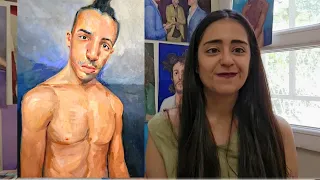
Painting a Portrait ,Semi Nude Male Figure
-
15:05
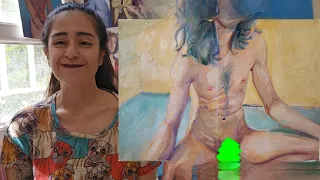
Covenant, Art, and Aesthetics through paint ,a Nude Male Figure sitting cross-legged looking upward
-
12:28
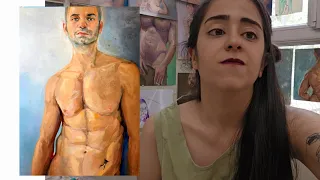
Nude Male Painting and the Transcendental Aesthetics Logical End Point
-
00:31

Portrait painting woman eye details glam #artbyancient #painting #portrait #eyes #details #eyemakeup
-
00:26

Fine Line Print, Beige Abstract Woman Print, Female Nude Body mid century modern Scandinavian Print,
-
02:59

Gal Gadot Sexy Mashup 2017????FAP TRIBUTE + NUDE PHOTOS IN THE DESCRIPTION 1
-
00:59

charlie d'amelio fap tribute
-
02:55

FAP TRIBUTE #40 - SVETA BILYALOVA
-
05:37

Taylor Swift | FAP TRIBUTE | SEXY COMPILATION
-
00:11

Yummy Fap Tribute Remastered Ultimate Collection Edition 4k HD
