
Egon Leo Adolf Ludwig Schiele (German: [ˈeːɡɔn ˈʃiːlə] ; 12 June 1890 – 31 October 1918) was an Austrian Expressionist painter.
Gustav Klimt, figurative painter of the early 20th century, was a mentor. His work is noted for its intensity and its raw sexuality, and the many self-portraits the artist produced, including nude self-portraits. The twisted body shapes and the expressive line that characterize Schiele's paintings and drawings mark the artist as an early exponent of Expressionism.
Schiele was born in 1890 in Tulln, Lower Austria. His father, Adolf Schiele, the station master of the Tulln station in the Austrian State Railways, was born in 1851 in Vienna to Karl Ludwig Schiele, a German from Ballenstedt and Aloisia Schimak; Egon Schiele's mother Marie, née Soukup, was born in 1861 in Český Krumlov(Krumau) to Franz Soukup, a Czech father from Mirkovice, and Aloisia Poferl, a German Bohemian mother from Český Krumlov.
As a child, Schiele was fascinated by trains, and would spend many hours drawing them, to the point where his father felt obliged to destroy his sketchbooks. When he was 11 years old, Schiele moved to the nearby city of Krems (and later to Klosterneuburg) to attend secondary school.
To those around him, Schiele was regarded as a strange child. Shy and reserved, he did poorly at school except in athletics and drawing, and was usually in classes made up of younger pupils.
When Schiele was 14 years old, his father died from syphilis, and he became a ward of his maternal uncle, Leopold Czihaczek, also a railway official. Although he wanted Schiele to follow in his footsteps, and was distressed at his lack of interest in academia, he recognised Schiele's talent for drawing and unenthusiastically allowed him a tutor, the artist Ludwig Karl Strauch. In 1906 Schiele applied at the Kunstgewerbeschule (School of Arts and Crafts) in Vienna, where Gustav Klimt had once studied. Within his first year there, Schiele was sent, at the insistence of several faculty members, to the more traditional Akademie der Bildenden Künste in Vienna in 1906. His main teacher at the academy was Christian Griepenkerl, a painter whose strict doctrine and ultra-conservative style frustrated and dissatisfied Schiele and his fellow students so much that he left three years later.
Some critics such as Jane Kallir have commented upon Schiele's work as being grotesque, erotic, pornographic, or disturbing, focusing on sex, death and discovery. He focused on portraits of others as well as himself. In his later years, while he still worked often with nudes, they were done in a more realist fashion.
From a young age, Schiele drew with 'manic fluency'.
Art critic Martin Gayford wrote in The Spectator: 'He [Schiele] found his distinctive style very early. His entire oeuvre is that of a young man; most of the work in the first of the two rooms this densely packed little exhibition dates from 1910 – 11, when Schiele (1890–1918) was just 20. That helps to explain some tendencies: a half-disgusted preoccupation with sexuality and a similarly queasy fascination with examining his naked self. The male figures mainly seem to have been modelled by the artist, though it is hard to be certain since the head is often not included.'
- Category
- Fap tribute Fap challenge
- Tags
- painting, photographic, picture
Commenting disabled.
Up Next
Autoplay
-
00:38
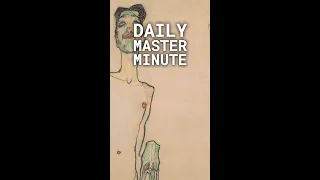
Appreciate Egon Schiele #DailyMasterMinute #shorts
-
05:41
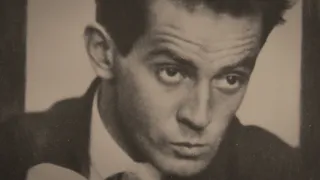
Art Conservation: EGON SCHIELE
-
00:38
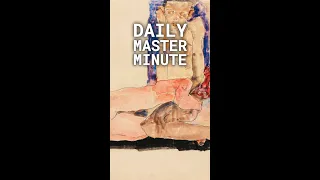
Appreciate Egon Schiele #DailyMasterMinute #shorts
-
2:31:01
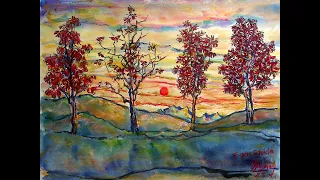
Henry Li's Live Streaming Painting Master Study with Rob Sherrill: Egon Schiele
-
06:09
Egon Schiele Art Lesson | Painting the Male Figure Art Tutorial
-
02:59
Gal Gadot Sexy Mashup 2017????FAP TRIBUTE + NUDE PHOTOS IN THE DESCRIPTION 1
-
00:59

charlie d'amelio fap tribute
-
02:55

FAP TRIBUTE #40 - SVETA BILYALOVA
-
05:37

Taylor Swift | FAP TRIBUTE | SEXY COMPILATION
-
00:11

Yummy Fap Tribute Remastered Ultimate Collection Edition 4k HD
